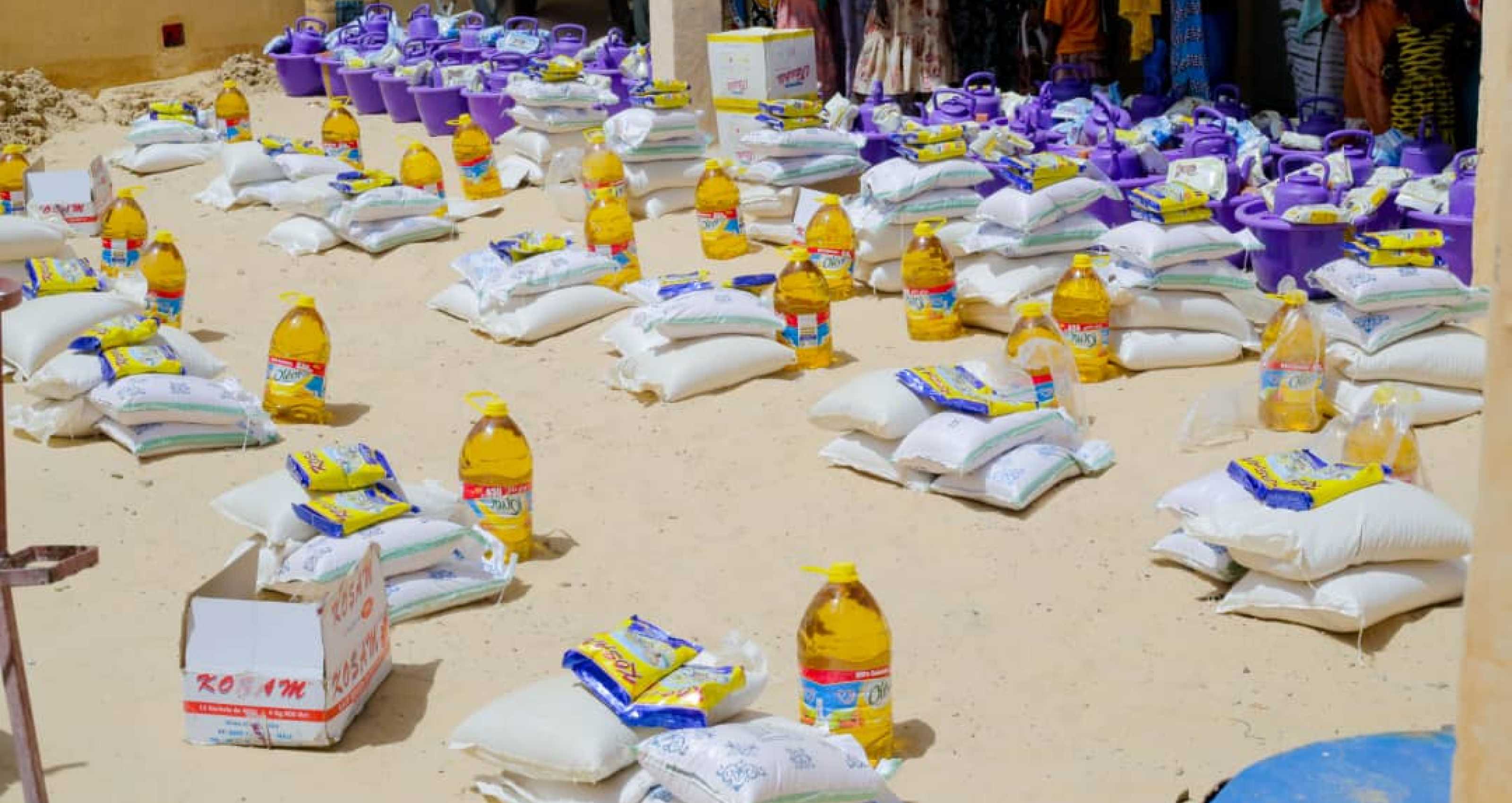
In the northern regions of Mali, conflict and insecurity have pushed millions into humanitarian crisis. Among the most urgent needs is child nutrition. Health facilities across Gao and Tombouctou were identifying children as malnourished but had nothing to offer them. As Hazara Ouedraogo, LWR’s Mali Country Director, put it: "They tell you your child is malnourished but there's nothing that can be done."
Lutheran World Relief (LWR), working with local partners ADENORD and FUSC, in partnership with MIHR and funded by the Gates Foundation, set out to change that – providing children aged under 5 with fortified food and nutritional supplements across a four-week treatment cycle. The question was how to deliver it.
The challenge
Delivering assistance in Mali is rarely straightforward. Mobile networks are unreliable, infrastructure is damaged by conflict, and cash transfers are too risky. LWR needed a way to deliver targeted voucher-based support that could operate without connectivity, track individual children through a multi-week treatment cycle, and give programme managers in Bamako real-time visibility of what was happening more than 1,000 kilometres away.
Previous voucher programmes had relied on paper: manual counting, no real-time data, vouchers lost, and no visibility until someone compiled information at the end of the week. A spreadsheet and a form were not enough to link each child, voucher, distribution, and nutrition status in one trackable workflow.
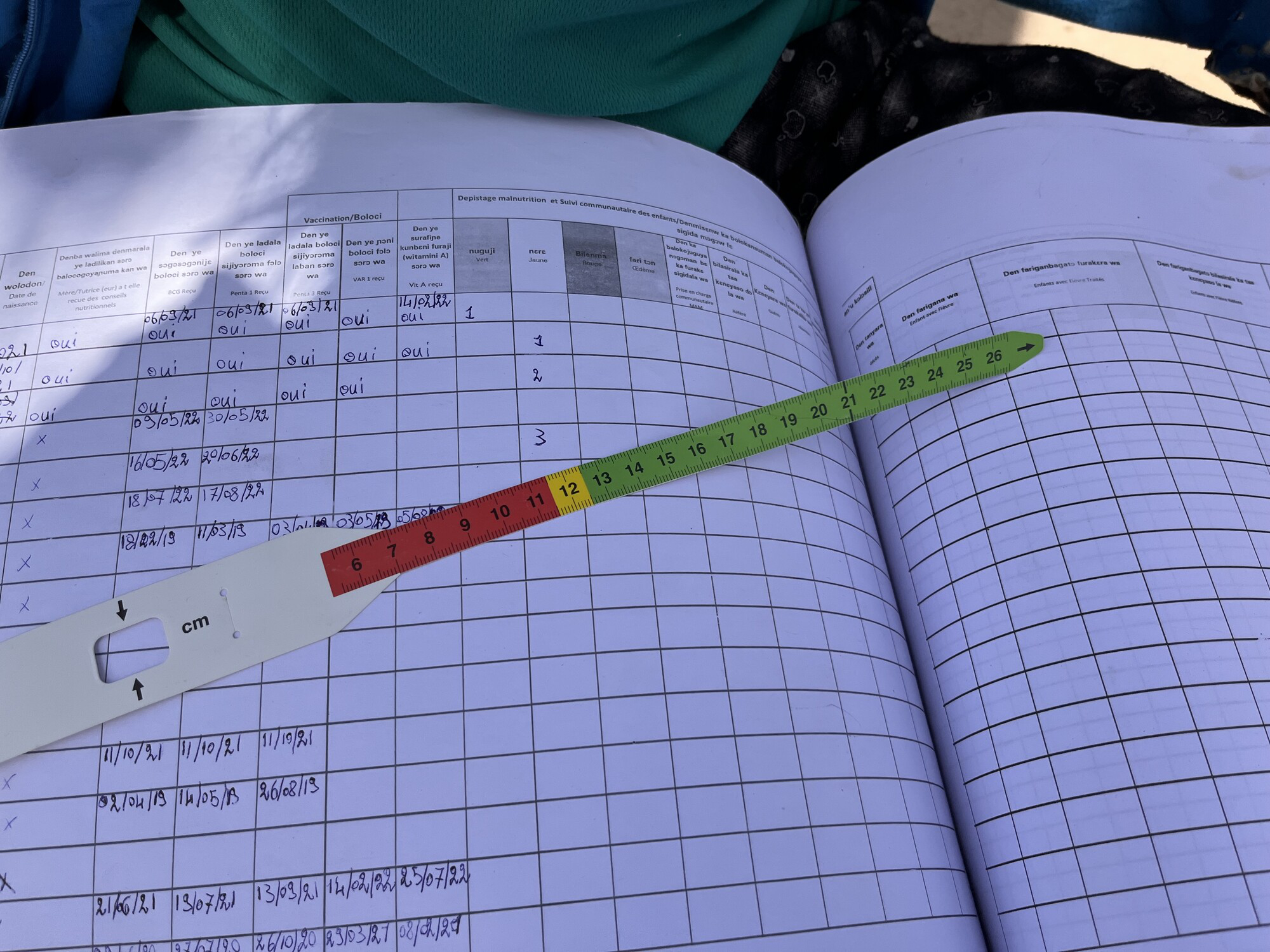
A paper malnutrition screening register from another LWR nutrition programme in Mali.
The solution
LWR turned to Corus International family member, CGA Technologies, and 3D, its intelligent data platform for project delivery. It was the first time 3D had been used to manage a voucher-based emergency humanitarian response.
Working closely with LWR, CGA built QR code functionality into 3D, allowing field teams to print paper vouchers linked to individual participant records and scan them using a standard smartphone – with no need for specialist equipment or live internet connection. A single wallet voucher covered four food items distributed across four weeks, flexible enough to reflect each child's changing nutrition status at every stage. Registration, voucher issue, redemption and distribution monitoring all happened in one connected system rather than across separate tools. Clinical treatment records stayed with the health facilities, maintained on paper under Ministry of Health procedures.
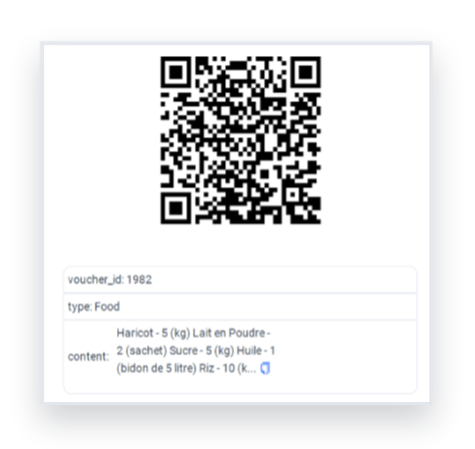
A voucher record in 3D. Scanning the QR code brought up the child's record and the items they were entitled to.
How it worked
At each of eleven health facilities, a nutrition focal point identified malnourished children. Field agents recorded each child's details in 3D, generating a QR-coded voucher linked to that child's record. Each week, health staff assessed the child and determined what support was needed, while field teams scanned the voucher and recorded the distribution. Families received enriched flour each week, followed by a family food kit at the end of the treatment cycle. Data synced to the platform automatically when connectivity was restored. At every stage, the child remained linked to their voucher and to every distribution they received – without manual reconciliation.
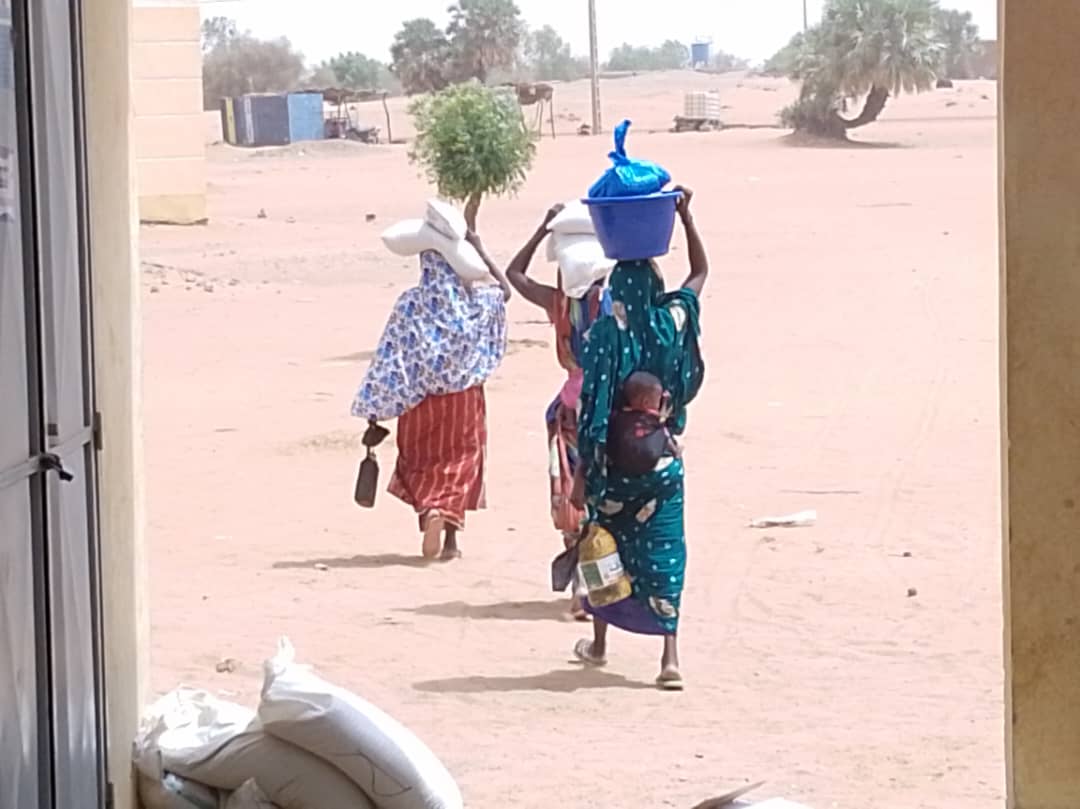
Families leave a health facility with their food kit at the end of a child's treatment.
What it made possible
With 3D, programme managers in Bamako could see distributions as they were recorded. "Distribution is ongoing in the field more than 1000km away from us," Hazara said. "We can be aware automatically on the number of [participants], the kind of products they [received], we can follow the process like we are in the field."
When two health facilities reached their target numbers, the team was able to brief the nutrition focal points immediately, before more children were identified for support that was no longer available.
When participant numbers at two facilities showed no change over successive weeks, the team raised it with CGA. The cause turned out to be field agents using the wrong form in the app. Once they switched to the correct one, the numbers rose as expected. On a paper system the gap would not have surfaced until end-of-cycle reporting, weeks later, with the distributions already over. Project lead Mohamadou Hamadjoda noted: "It's because we used 3D that we noticed the data was not accurate. We would not have known otherwise. 3D supports corrective action and programme quality assurance in real time."
Between March and July 2024, over 2,700 children received supplementary feeding and over 2,300 families received food vouchers. Distribution data was disaggregated instantly by facility, age, sex and location, without the manual compilation that would otherwise have taken weeks.
The programme itself was independently evaluated. Reviewing 1,806 child treatment records held at the health facilities, the evaluators found a 97.3% recovery rate against a Sphere standard of 75%, with no deaths recorded.
Why 3D worked here
3D enabled what mattered most in the context:
- Offline-first design meant field agents could register children and record distributions without a live connection, syncing automatically when connectivity returned. In areas where networks are absent entirely, this was essential.
- Flexibility meant the system adapted as the programme learned. Midway through, the programme shifted from multiple voucher types to a single wallet voucher, configured without rebuilding from scratch.
- Responsive development meant that when LWR needed something 3D couldn't yet do, CGA built it – quickly and collaboratively. As one LWR team member reflected: "We tell them we need something, they take it and propose solutions. They are very proactive."
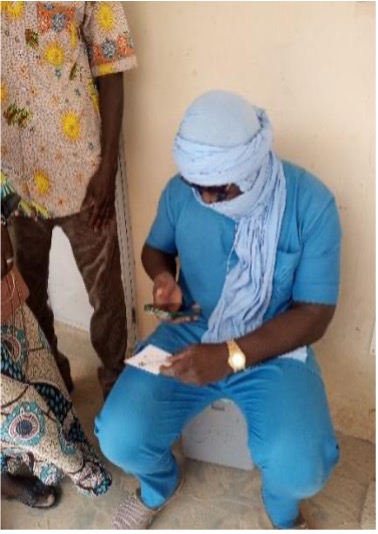
A field agent registers a child in 3D at a health facility. Each registration generated a QR-coded voucher linked to that child's record.
What comes next
This programme demonstrated what's possible when technology is built around the realities of humanitarian delivery. The QR voucher functionality now exists in 3D, ready for future emergency responses without needing to be rebuilt. As a first deployment, it also surfaced practical lessons about forms and workflows that will make the next response faster to set up.
Lutheran World Relief implemented this programme in partnership with ADENORD, FUSC and MIHR, funded by the Gates Foundation.
Learn more
Read how 3D supports:
The TRACE cocoa programme in Nigeria, and
Explore 3D, the intelligent data platform for project delivery.