
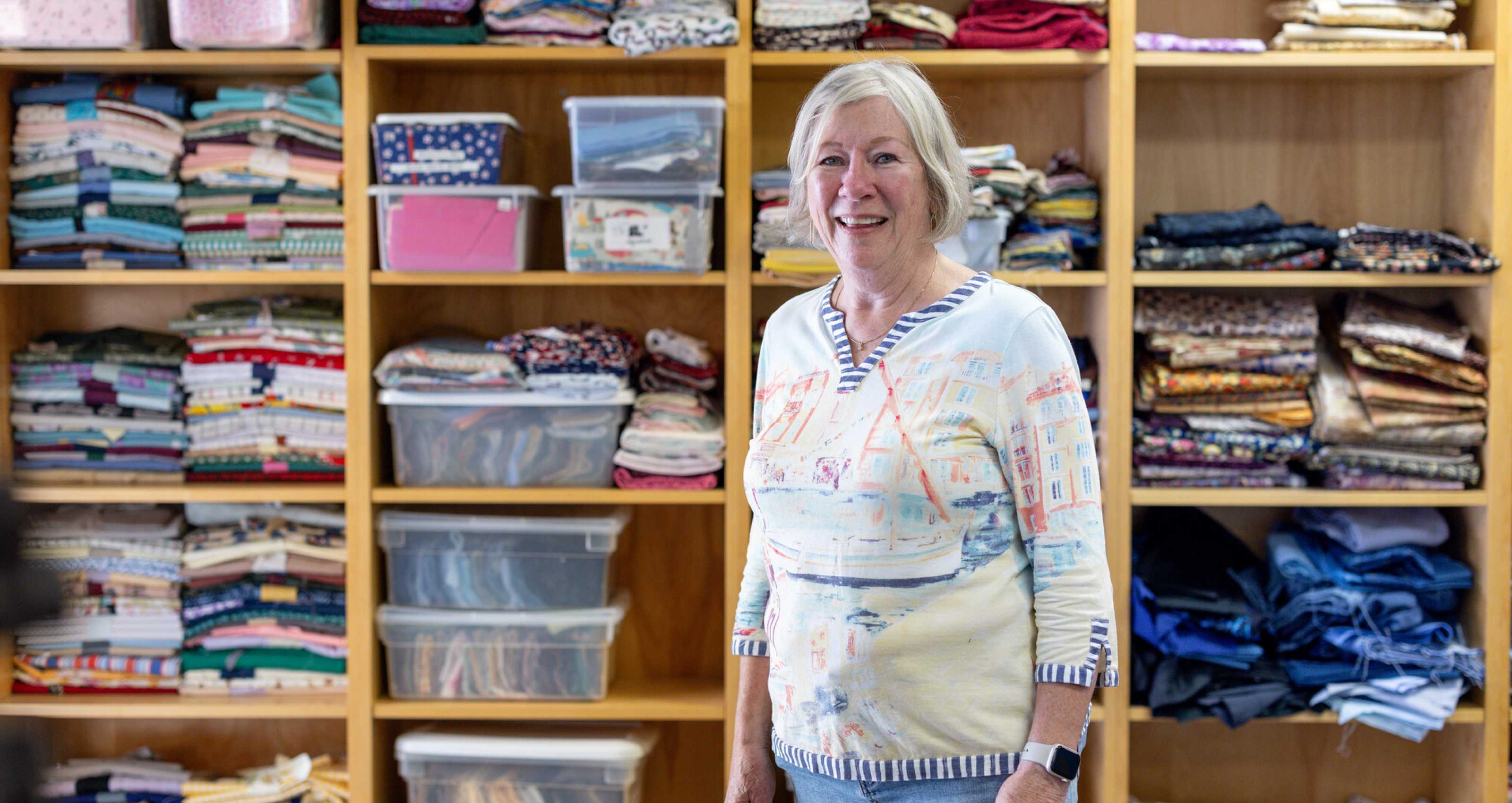
Every year, Lutheran World Relief's Material Resources programme coordinates the collection and distribution of up to one million quilts and hygiene kits — donated by families across more than 16,000 US congregations and distributed to humanitarian responses around the world. It is one of the largest and most loyal donor networks in the Corus family, built on decades of community commitment.
But the programme's ability to manage and communicate that generosity had not kept pace. The donation tracker, developed more than 15 years ago, was cumbersome and only around 20 percent of donors used it. This left the team with limited visibility of incoming stock, no mechanism for proactive planning, and little ability to report back to donors on who their donations reached.
The challenge
The material resources supply chain is complex. Donations travel from local churches to area ‘Ingatherings’ and then to a central warehouse, where processing takes three to six months before goods are senton to a humanitarian response. With the previous system, the warehouse team often had no clear picture of what was arriving until it was already there.
And because donations couldn't be reliably traced from origin to destination, there was no credible way to tell a donor that their quilt had reached families in a specific crisis — a gap that limited donor engagement and left long-standing supporters without the connection to impact they deserved.
The solution
LWR turned to Corus family member, CGA Technologies, and its intelligent data platform for project delivery, 3D. As technology partner, CGA designed the full data pipeline: from 3D, which manages donation tracking, through to Goldfinch Cloud Solutions, Corus' warehouse logistics system, and back into 3D once goods are distributed, so that congregations can view where their donations went.
First, the congregation registry needed fixing. The registry holds over 16,000 records, but many were incorrect (towns in the wrong states and mistyped ZIP codes) or duplicated. Using AI, CGA checked each record against official US government reference data, identifying faulty records and proposing corrections for LWR to review and approve.
The now-clean and updated registry underpins the pre-registration portal, through which congregation leaders log donation batches in advance. QR codes are generated for each batch and travel with donations through the supply chain — from church to Ingathering to warehouse. This gives the Material Resources team visibility of incoming stock months ahead of arrival, a capability that did not previously exist.
Goldfinch went live in June. Once tracked batches are distributed, data will feed back into 3D, and Corus will be able to provide every donor with credible feedback on where their donations were sent.
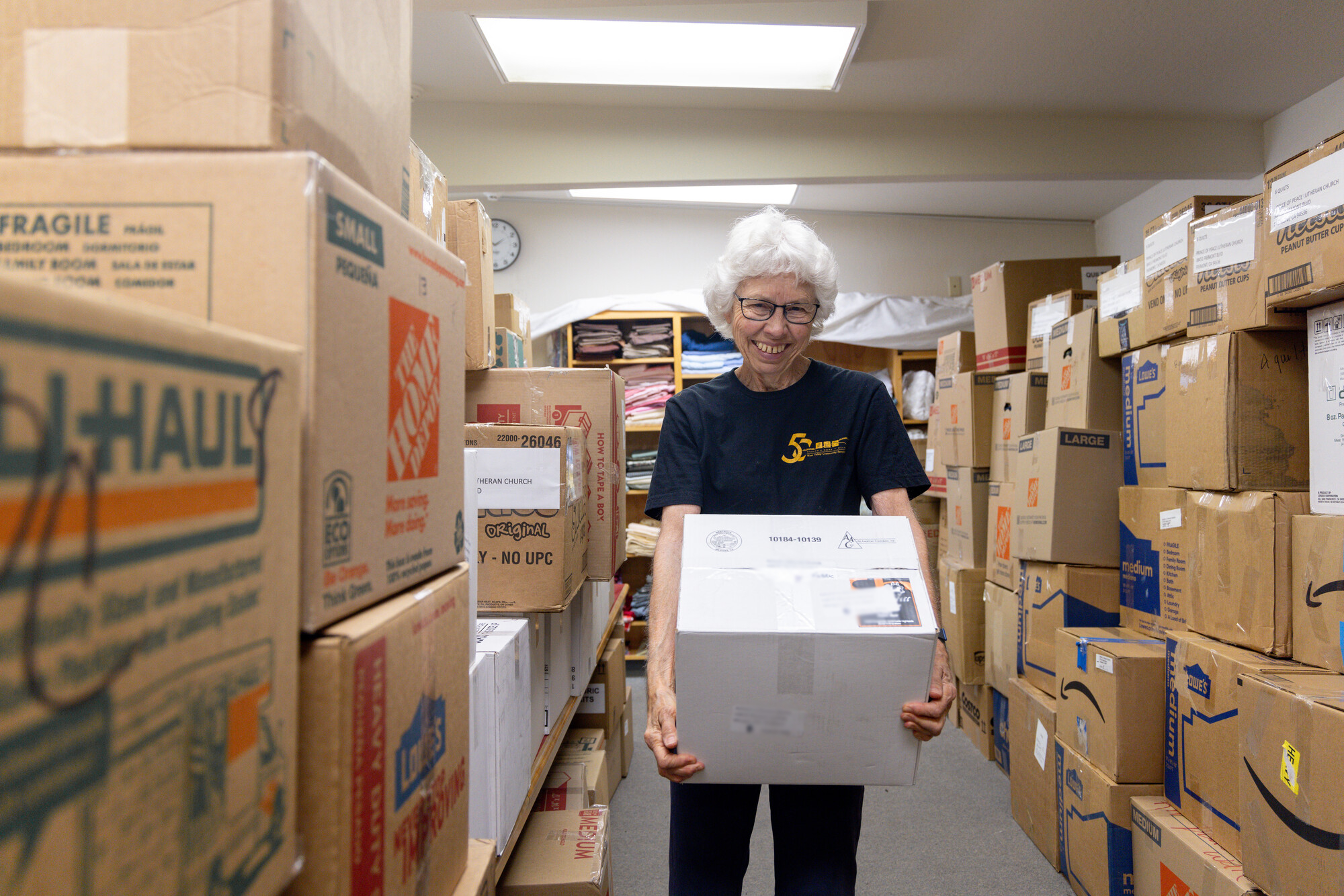
Amita Tysseland at an ingathering in Cupertino, CA, where 27 congregations donated 462 boxes of 3,400 quilts and kits over three days.
How it works
Congregation leaders use 3D to log and track donation batches at events called ‘Ingatherings’. More than 150 congregations already have active 3D accounts.
The process works as follows:
A congregation pre-registers its batch online. A QR code travels with the donations through the supply chain. At each stage, the batch is logged in the relevant system and that data flows back into 3D — where it is made visible to the Material Resources team and, ultimately, to donors through online dashboards showing the responses and countries their donations supported, broken down by product type.
The system is designed to support the tracking of millions of donated items at national scale, accessible via Android and iOS mobile applications.
What it makes possible
Operationally, the team moves from reactive to proactive. Knowing what donations are coming months in advance means inventory planning and emergency readiness can start months earlier.
Relationally, the system changes what Corus can offer its donors. A church volunteer who spent hours making a quilt will be able to see where their congregation's donations went.
Early feedback from quilters and church volunteers is encouraging. The system is described as accessible and intuitive, already generating wider participation among congregations that previously did not engage with the tracker.
This is way less labeling than we are used to. This seems too easy.
— Kathy, congregation volunteer
So many people get motivated if they know where quilts and kits end up.
— Marilyn, congregation volunteer
What comes next
LWR is promoting and training congregations on the new tracker ahead of the spring ingatherings. As use of the new system grows, the Material Resources programme will have something it has never had before — a clear, end-to-end picture of donation batches, from the congregations that sent them to the humanitarian response it supported.
For a programme built on the generosity of 16,000 congregations, it is a way of honouring the people behind every donation.
CGA Technologies is working alongside LWR as a technology partner, leading the design of the data pipeline between 3D and Goldfinch.